Library Hours
Monday 8 am – 8 pm
Tuesday 8 am – 8 pm
Wednesday 8 am – 4:30 pm
Thursday 8 am – 8 pm
Friday 8 am – 8 pm
Saturday 9 am – 12 pm
Sunday Closed
Frequently Asked Questions
Director of Library Resources and Learning Resource Center (727) 376-6911, Ext. 343
Library Front Desk (727) 376-6911, Ext. 341
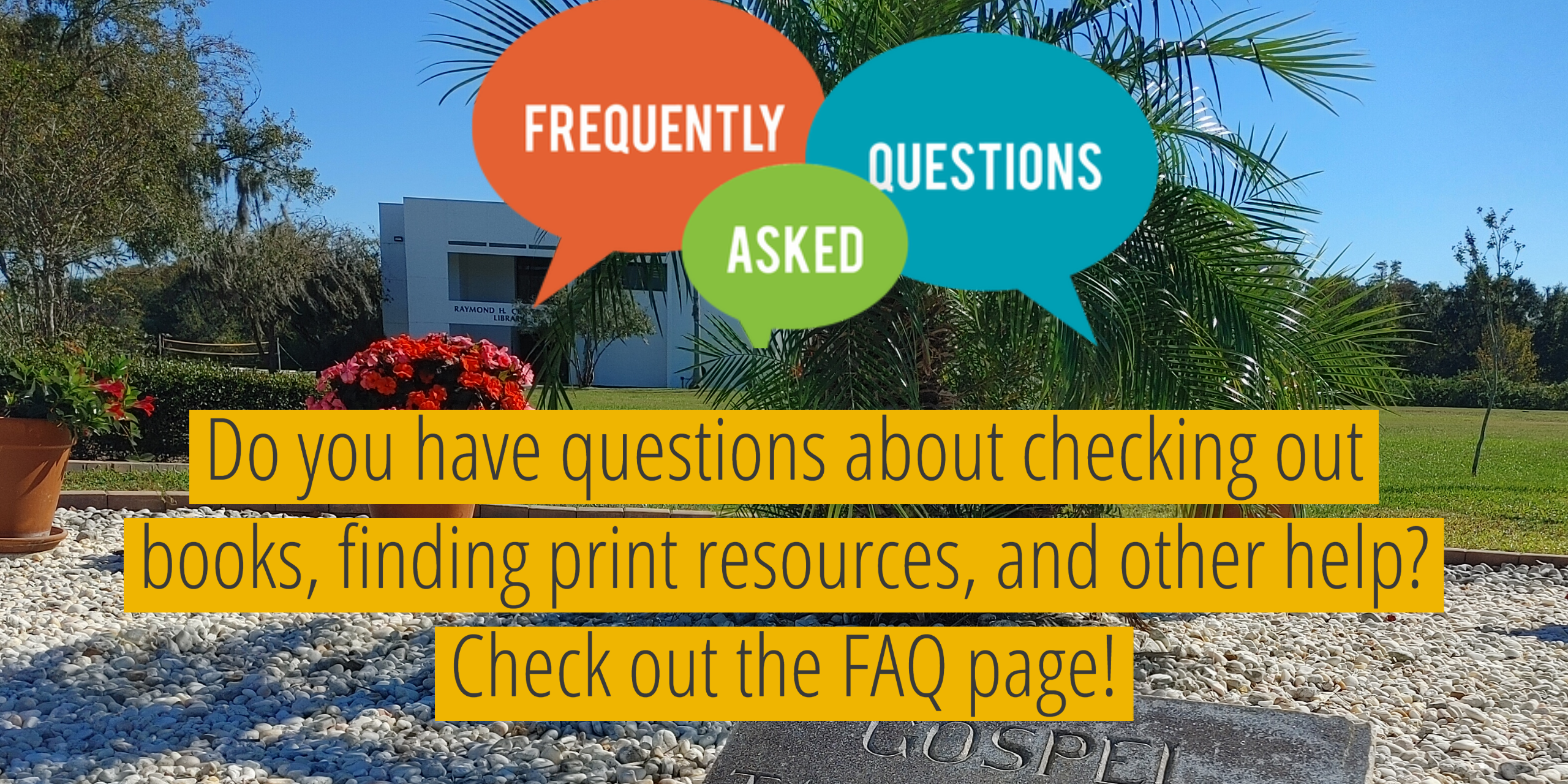
Where is the Library located?
The library is located in the Dr. Raymond H. Center Library building on the Trinity College of Florida campus. 2430 Welbilt Blvd., Trinity, FL MapQuest
What exactly can the Director of Library Resources and Learning Resource Center help you with?
You can contact the Director of Library Resources and Learning Resource Center, by phone, email or Google Hangout. They can help you narrow down a topic, find resources for your topic and evaluate those sources to make sure they meet the requirements of your assignment and are scholarly.
Director of Library Resources and Learning Resource Center (727) 376-6911, Ext. 343
Library Front Desk (727) 376-6911, Ext. 341
How do I find print books located in the Library?
You will want to search the Library Catalog (located on the Library website) OR by logging into OasisSIS and searching the Library OPAC. This is where you will find all the print books physically located in the library.
How do I find print journal articles located in the library?
The Library has many print journals located in the back of the library stacks. They are organized alphabetically and clearly labeled. Frequently you can search the journal online for an index of the articles located within them.
How do I check out a book?
When you find a book that you would like to check out, take it to any of the LRC (Learning Resource Center) staff members. They will be happy to check out a library book for you.
How long can I keep a book when I've checked it out?
Books are checked out for 21 days.
How do I renew the books that I've checked out?
You can renew your books for an additional 21 days by either going to the Library and speaking with an LRC student worker OR by logging into OasisSIS and viewing your library account.
How do I return books to the library?
Books being returned to the library can be placed in the Book Return slot located in the lobby of the Library building.
How do I search for ebooks and online journal articles?
You can locate ebooks and journal articles through EBSCO (search.ebsco.com) and Proquest (search.proquest.com). They are easily organized on the Ebooks and Databases page on the Library website.
How do I find an answer to a Library question not listed here?
Contact the Director of Library Resources and Learning Resource Center, with any of your Library questions. You can do this by phone, email or Google Hangout.
Director of Library Resources and Learning Resource Center (727) 376-6911, Ext. 343
Library Front Desk (727) 376-6911, Ext. 341